Tuesday, 16 August 2011

Tentative Venture...

I've decided to try blogging on lots of topics instead of just religion for a while...

This is probably a bad move as I know even less about politics, education etc. than I do about religion...but my new blog is not supposed to be an expert analysis of things, but rather just some (seemingly drunken) rambling which you are free to pick apart (as long as you're nice about it).

So feel free to check it out!


Thanks for all your support!

Thursday, 21 April 2011

The Human Jesus

Today, as most Christians will know, is Maundy Thursday. It is traditionally the day in which Christians commemorate the Last Supper, and reflect upon the night in which Jesus died.

Thinking back to the night in which Jesus ate his last supper with his friends, and prayed in the garden of Gethsemane, I am struck most by the humanity of Jesus at this time. Whether one thinks Jesus is/was the Son of God, an inspired man, a moral teacher with no divinity whatsoever - it is his humanity which is most prominent in this stage of his life.

The Gospel accounts of the Last Supper are fairly straightforward. They basically say the essence of what Jesus said and did. Now, this is not a criticism - how do I know what the evangelists were attempting to achieve with their accounts? It is quite possible that they did not intend to offer any more information than the bare essentials.

But when we read these infamous words, do we ever think about what on earth must have gone through Jesus' head on this night? To share bread, saying "Do this in remembrance of me". To talk about himself as a deceased person. To realise what he was going to face. And to point out that one of his friends, the 12 people to whom he was closest in his life (excluding, of course, his family and potentially a few of his other dear friends, female and male), was about to hand him over to be crucified? Did that break his heart? Would he have felt hurt?

Presumably fear struck him; as he prays in the Garden of Gethsemane this becomes evident. He admitted to his friends: ‘I am deeply grieved, even to death...' (Matthew 26:38).
And after this, the one thing he asked of his friends, they let him down in: 'could you not stay awake with me one hour?' (Mt 26:40). It may have seemed a small thing to some: falling asleep when it's late at night and one is exhausted; but Jesus was facing death and at a point like this, with emotions truly heightened, it must have felt as if the people he loved most repeatedly neglected him.

Luke 22:44 suggests that Jesus' sweat became like drops of blood. Jesus is more than aware of what is going to happen to him and he is probably more frightened than ever before. He is about to face public humiliation, torture, excruciating pain and a slow, agonising death.

So what's the point here? The point is that Jesus suffered immensely in the run up to his crucifixion, not just during it. In less than 24 hours he would have experienced hurt, disappointment, fear, anxiety and anguish. Yet he pursued his call to the end and faced what he had to. From this we can take both inspiration and comfort: inspiration to pursue what we believe is right at whatever cost, and comfort in knowing that at those times when we feel low, hurt, betrayed, scared or anxious, Jesus does not simply sympathise or look on from a distance - he empathises, saying "I've been there too".

Tuesday, 12 April 2011

A more miserable society

"Research suggests that despite having much more materially than previous generations, the country is no happier than it was half a century ago."

So writes Murray Wardrop of the Telegraph. This is, of course, not entirely shocking, despite the phrasing of this paragraph. To quote the very old cliché, "money can't buy you happiness".

Every day newspapers, news bulletins and blogs are filled with sad or depressing news: more cuts are being made, another young person has lost their life due to mindless violence, or another disaster or dictator somewhere abroad has wrecked thousands of lives.

What is the cure to this? If everyone were to suddenly become a bit richer, would this make society much happier? Somehow I strongly doubt this. We in the West are, despite rising unemployment and so on, incredibly fortunate. To have permanent homes, regular food and clean running water puts us in a very fortunate minority. To have cars, televisions, computers, mobile phones and iPods makes us really incredibly wealthy. As a country we've been fortunate enough to enjoy such benefits for many years; yet this hasn't really made us much happier.

So, is it time for a big rant about how we're terrible people for having homes and food and gadgets? And money in general? Well, I'm not going to. Material things aren't, in my belief, intrinsically evil. On the contrary; food and water are necessities and the fact that we are privileged enough to enjoy them almost obliges us to use them - though sensibly and with unceasing gratitude.

They become problematic, however, when people seek from them happiness and fulfilment (as seems to be implied by the shock that material increase hasn't made us happier). Such ideas can also be found in the New Testament. Paul did not condemn money itself, but writes:

'the love of money is a root of all kinds of evil...' (1 Timothy 6:10)

Money itself is not necessarily the source of wickedness, therefore, but the love thereof. Preceding this well-known verse is a warning about the desire for wealth:

'But those who want to be rich fall into temptation and are trapped by many senseless and harmful desires that plunge people into ruin and destruction.' (1 Tim 6:9)

Jesus also warns that one cannot serve to masters - both God and wealth. Again, this is not necessarily a condemnation of wealth, but of the idolisation of wealth, or the prioritisation of money above all else.

So I've rambled on about not falling in love with money and not looking to it for happiness and fulfilment...but what is the solution? If I could give a definitive answer, I feel I would be famous by now. But a few suggestions of things to contemplate can be found from the source of wisdom that is the Bible. What did ancient Israelites claim would bring them happiness?

"Happy are those who find wisdom, and those who get understanding" (Prov 3:13)

"O Lord of hosts, happy is everyone who trusts in you" (Psalm 84:12)

"Happy is one who finds a friend, and one who speaks to attentive listeners" (Ecclesiasticus 25:9)

"Happy is the husband of a good wife; the number of his days will be doubled" (Ecclesiasticus 26:1)

Clearly these ancient writers in much more primitive and less materialistic societies could actually grasp something of what led to happiness. I would not attempt to suggest that here lies the solution to all happiness; but pursuing such things as listed here - God, wisdom and knowledge, love and friendship - is far more likely to bring about a sense of fulfilment and lasting satisfaction than anything material.

Monday, 28 March 2011

Jesus the Radical

From time to time it really hits me just how radical Jesus was: in his words, in his attitudes, in his behaviour.

The passage from John's Gospel set as today's lectionary reading really brings this home. It's the passage in John 4:5-42 in which Jesus visits a well and asks for a drink from a Samaritan woman, leading to a discussion about the water of eternal life.

In focussing on the message of water in eternal life, it strikes me that there are three major aspects of this reading which could easily be overlooked, yet speak volumes:

  1. Jesus was human.
    It's quite something when John makes a point of describing Jesus in a human way, for he usually takes great pains to emphasise the divinity and high status of Christ - far more so than the authors of the synoptic gospels. But in this passage, John specifically states:
    'Jesus, tired out by his journey, was sitting by the well' (Jn 4:6).
    It's especially important to remember when reading John that Jesus is not some alien figure; like every other human being he experienced pain, fatigue, anger and a whole other array of human emotions.

  2. Jesus overlooked race boundaries.
    For centuries Jews and Samaritans were divided; Samaria was in the northern kingdom, Judah in the southern, and since the united monarchy they had been separate. The divide was deep: children of Samaria grew up with the understanding that they didn't associate with people from Judah, and likewise those from Judah learnt very quickly to avoid Samaritans.

    But for Jesus, this wasn't going to happen. He was in need of a drink, and a Samaritan woman was present. Connecting with another human being on the human level was far more a concern than long-standing cultural animosity. The woman, however, is clearly taken aback when he asks her for a drink, for she asks: ‘How is it that you, a Jew, ask a drink of me, a woman of Samaria?’ (Jn 4:9).

    Clearly Jesus envisaged a kingdom of God which did not exclude anyone - certainly not on the basis of race.

  3. Not just race boundaries, either...
    The fact that this lady is Samaritan is not the only shocking thing here...she is, of course, a woman! To the twenty-first century reader, of course, this wouldn't raise an eyelid; but one must put oneself in the cultural context. It's 1st century Palestine...and women are effectively considered second-class citizens. Women would have had certain domestic roles, including of course as mothers - but this would have been their main domain. It would have been quite shocking for not just any man, but a man like Jesus who was revered in some circles, to have been in conversation with a woman. Yet Jesus time and time again is found talking to women and even defending them (cf. Matthew 26:6-13).

    In this passage, John explicitly states that: '[The disciples] were astonished that he was speaking with a woman' (Jn 4:27). He also tells us of her fundamental role in spreading the good news of Jesus: 'Many Samaritans from that city believed in him because of the woman’s testimony' (4:39).
What is abundantly clear from this passage, therefore, is that Jesus envisages an inclusive kingdom where people of all races and genders are not only welcome, but also valued, having an important role. Perhaps churches and church leaders who attempt to exclude people from leadership or even membership would be well-advised to consider this.

Friday, 25 March 2011

Mass exodus?

It appears that there will soon be a mass exodus of Exodus International applications from iPhones - an application which Apple initially approved.

I've been reading about the whole application here: http://exodusinternational.org/

It appears that Exodus International is an organisation which promotes certain strands of Christian teaching and one of those areas regards conservative interpretations of Scripture on homosexuality. (I won't go into my take on these, as I've done it about 100 times already).

The picture being created is of a homophobic and hateful organisation promoting the 'curing' of people from their homosexuality through many means, one of which is an iPhone application. If this picture is correct, then Apple are correct in withdrawing it: irrespective of one's personal beliefs, it is entirely irresponsible to promote an application which could be damaging and hurtful to thousands of people on the basis of an element of their nature which they neither chose nor invented. Such an application would be as unacceptable as one attempting to cure people of their skin colour.

However, it seems that this isn't quite the case. The organisation quite clearly acknowledges that one cannot be 'cured' of one's sexual orientation and claims to approach the subject with compassion and consideration.

What the organisation attempts to do therefore is to encourage those with conservative Christian beliefs and homosexual orientations to seek to discipline themselves not to act on them.

Do I agree that what Exodus International encourages is correct? Absolutely not. Do I think that they are taking the right approach? Probably not. Do I think that their beliefs are agreeable on the whole? Not really.

But, despite their beliefs being highly conservative and some of their claims regarding homosexuality highly questionable, it is not entirely clear that their views are hateful and homophobic. For that reason, it does not strictly seem to be necessary that the application is
withdrawn.

And, unfortunately, the result of such an action is invariably the protests of conservative religious believers that the devil is at work, persecution of Christians is on the rise and most Western citizens are on their way to hell. Oops, no sooner had I said it....

Monday, 20 December 2010

Christ in Christmas?

I grew up hearing annually the complaints of other Christians about the Christ being taken out of Christmas...whether it was from people's (misinformed) objections to the use of the word 'Xmas' or myths being spread about the whole nation apparently replacing 'Christmas' with the term 'Winterval' (something which was in fact one campaign run by the Birmingham City Council in 1998).

After some reflection I've decided to argue that Christ is still very much present in Christmas in 2010 and that He shall continue to be.

It is of course true that Christmas is heavily commercialised (is it really necessary to sell Christmas cards in September?) and that dinners and snowmen and more the emblems of Christmas than a manger or wise men for many people. The approach I'm going to take will not be to deny this, but instead to reconsider what we mean by Christ being in Christmas.

Presents are one of my favourite parts of Christmas. I love that feeling of getting something you want - and perhaps even more that feeling of someone opening your present and their face lighting up. There is something truly satisfying in knowing you've made a person happy, helped them in some way, given them something they desired.

Some Christians might protest that presents are a commercial tradition and embody society's materialistic culture. However, one must not forget that presents originate from the tradition which says that Magi from the East came and brought gifts to the newborn baby Jesus. Of course, that isn't the thought in everyone's mind when they're giving presents - and I'm not going to try suggesting otherwise. But the fact remains that, for whatever reason, this tradition has continued.

Furthermore, giving presents is still a shift away from the individualistic culture we seem to have. I believe it is more than just a product of materialism; I believe it is a simple practice that represents people's inherent love, fondness of others and joy in the company of others. A lyric from Louis Armstrong's What a Wonderful World for me encapsulates this idea:

'I see friends shaking hands saying how do you do -
They're really saying I love you'

This act beyond shaking hands for me is this way of people expressing their gratitude for one another - a thankyou for friendship, or for the joy they have brought as a parent, child, partner, mentor.

Let it not be forgotten also that many people also give gifts through charities, help the homeless and work in soup kitchens, and take in people who would otherwise be alone at Christmas.

Why is this significant? Because this was the kind of attitude that Christ preached and lived by. Feeding the hungry, helping the needy, showing love to others - even one's enemies. (Here's where I also recall that Christmas is often a time of reconciliation.) Christ is not just present when we sing carols or attend Christmas church services. He is also present wherever people show love to others - be they relatives, friends, enemies or total strangers.

So, in summary - I'm not despairing just yet. Commercialisation and materialism may seem to be the dominating forces - but let us not forget two things: firstly, God is not bound by statistics. There is surely meaning in every case where an individual person who believes that Christ is central to Christmas; and secondly, that Christ is present not just in carols and churches, but in homes where presents are exchanged, in soup kitchens where the hungry are fed and where acts of charity and forgiveness and reconciliation abound.

Tuesday, 7 September 2010

More thoughtless thought

Another gem of a 4thought can be viewed here: http://www.channel4.com/programmes/4thoughttv/4od#3118646

The Rev James Gracie, a minister in Edinburgh, began by telling us that women should not be allowed to have primary roles in the church, including being preachers. His most sound and well thoughtout reasoning is as follows:

"Because the Bible tells us very clearly the roles that men and women are to have"

I always cringe when I hear statements like this. Two of my least favourite statements are: "Because the Bible tells us" and "The Bible tells us very clearly". As I consider myself a Christian, this fact may be surprising to some.

But the reason I object to such statements as the former is because the assumption is usually that something being in the Bible automatically renders it true - due to Biblical inerrancy and the like. And the reason I object to the latter is because the Bible does not tell us things very clearly - we glean things through our reading and interpretation of the Bible.

Least of all does the Bible tell us very clearly the role of men and women. I was hoping for a half-decent argument with this, but all this supposed minister managed to come up with was the oft-quoted 1 Corinthians 14:34-5

"Women should be silent in the churches. For they are not permitted to speak, but should be subordinate, as the law also says."

Once again this verse is quoted entirely out of context - both textual and historical. The textual context is actually in maintaining order in the church. Note in particular Paul uses the article here - the churches, not just churches in general. There was a specific problem with disorder and chaos in the Corinthian churches. I'd consider it 99.9% likely that Paul did not intend that women should remain silent in all churches throughout time, but that specific women in the Corinthian church ought not to just shout out randomly.

Progressing further with the historical context - let us also note that Paul was writing in the 1st century CE. Society was still incredibly patriarchal - women were meant to be subordinate and submissive and this was just the way things were. But something being a social norm in the time of the Biblical authors does not make it right! And it most certainly does not make it the will of God!

Yet again someone who has supposedly studied theology has taken the Bible, assumed his literal, and actually rather ignorant (literally, of social and textual context) interpretation is the correct one.

Unfortunately, this is the kind of attitude that has hurt and damaged women and the church for generations. I have had the privilege of knowing both female and male clergy and leaders in the church. And not only do I think that women have just as much to contribute as men - I actually think they have certain qualities which many men lack.

But perhaps the most important reason for accepting women in the church is that, quite simply, all are loved and accepted by God. God calls women and men to various roles - he calls some women and some men to teach, preach, practise law, practise medicine, serve in shops, clean, build...

It's 2010 - isn't it about time we ended this stupid view that men should dominate, and that some things are just for men?

Let us finish with the words of the Apostle himself, words which are often ignored when other words of his are used instead to hurt and destroy women in the church, but which have a great deal of value and upon which he placed no less significance:

"There is no longer Jew or Greek, there is no longer slave or free, there is no longer male and female; for all of you are one in Christ Jesus."
Galatians 3:28

Friday, 20 August 2010

Dawkins on Faith Schools

As I began to watch "Faith School Menace?", the documentary created and presented by Professor Richard Dawkins and broadcast on More4 on Wednesday, on 4oD, I was preparing myself for an hour of vitriol, pure polemic and poor arguments.

And, as much as I hate to admit it, I was wrong.

Professor Dawkins largely made arguments with which I personally do agree. I do agree that it isn't productive to segregate children in terms of 'faith' at an age where they themselves don't truly understand it.

Equally I agree that RE lessons in faith schools should, just like such lessons in secular state schools, be assessed by standard Ofsted inspections.

I also agree that children should be encouraged to question what they are told and not believe that all adults speak truth all of the time, and indeed in the importance of evidence.

I even agree with the one-to-one advice he gave to a headmaster of a Muslim school, that rather than teaching that science teaches one theory of human origin whilst Muslims instead prefer the explanation of creation, they should instead attempt to reconcile the two. Religious faith should not be used against scientific evidence.

However, I could not agree completely with Dawkins. He made the assertion in a primary school assembly that, if someone could not give sufficient evidence for something, then it probably wasn't true.

This is where I fundamentally disagree with Dawkins. Evidence is of course important - but evidence, in Dawkins' terms, is not the be all and end all. This is the reason why he cannot bring himself to believe in God - because for him, hardcore empirical evidence is a requisite for the acceptance of something.

I would indeed agree if Christianity, or Hinduism, or Islam, professed to be a system of knowledge. But they do not. They are systems of faith, of belief. Faith is not knowledge and therefore does not require hard empirical evidence. It is based on an understanding that not all things are knowable here and now via empirical study, but that instead reason, emotion and the holy books can be used to give meaning to people's lives.

For Dawkins, people should stop seeking meaning. Things just are because they are. We just evolved because we did. The sun exploded from a star because it did. The big bang just happened.

But this is a great hole in Dawkins' worldview. He is himself effectively agreeing that science does not answer the whys; it does not allow for purpose. It is sad that he objects so vehemently to religious beliefs when they can, by his own admission (see above) be reconciled with science.

So yes, faith and faith schools are limiting when they cause people to reject strongly supported scientific theories, and they are harmful when they cause division and conflict.

But I fail to see the tragedy in an ordinary lady or gentleman who understands human evolution and the origin of the world, for instance, as having happened for a special, divinely ordained purpose; in the human species evolving as we have being God's intention. They clearly do not reject science, nor do they claim their belief to be knowledge; but what they do reject is Dawkins' rather unjustified belief that a true scientist cannot hold a personal conviction that there is purpose to life.

Thursday, 19 August 2010

Religious Conscience vs The Rights of the Child

The organisation Catholic Care has lost an appeal to be allowed to discriminate against homosexuals when it comes to finding adoptive parents for children.

Ever since the introduction of the anti-discrimination laws people have been aware of the potential issues of people's legal obligations coming into conflict with their religious consciences. And this is a key example.

There will be many Catholics, particularly those involved in this organisation, who will be saddened or angered by the idea that they cannot exclusively allow heterosexual couples to adopt. Their perspective is that the Bible's passages on homosexuality are sufficient to suggest that God does not approve of it. I have a few thoughts on this.

The first is that there are still many Catholics, and Christians of other denominations, who do not feel this way. They may feel that God's love and acceptance is unconditional, and that the ambiguity of most of the Biblical passages suggests that we cannot assert adamantly that God is anti-gay.

What is also important to note is that the Bible does not mention same-sex couples, and likewise has nothing to say on gay adoption. Admittedly, it would have been unheard of in the times of Paul or the authors of the books of the law, but the fact remains that it is not mentioned.

But it is a fact that opinion is divided on this issue, and one cannot expect everyone to agree on this. For those who do disagree, it is worth remembering that Jesus himself spoke of giving to Caesar what is Caesar's; in this instance, the law demands that organisations do not discriminate, and in this case this has, legally, to be observed.

What may be of comfort to those who struggle is that, irrespective of their views on homosexuality, children from broken homes and living in care have new opportunities to go to a home and be brought up by two people who love them, and love each other.

Furthermore, giving a child to a gay couple would not be suggested by any part of the Bible to be sinful, and it is difficult to conceive of God punishing someone for obeying the law of the land in this instance.

Friday, 6 August 2010

A 'thought'

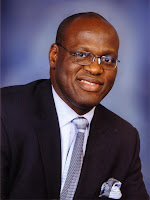
Meet Wale Babatunde...senior pastor of the World Harvest Christian Centre.

This man delivered this evening's 4thought on Channel 4, which can be viewed here:


I was left disappointed by this thought. The man seemed to imply that homosexuals were equivalent to thieves. (Perfectly logical I suppose, the one takes people's possessions, destroys their trust in humankind and leaves them in despair; the other is attracted to and falls in love with people of their own gender).

But the main reason I was left so disappointed with this 4thought was that, ironically and unfortunately, there simply wasn't any thought involved in it. Pastor Babatunde made the hideously fallacious statement that:

"The issue...should not be a matter of personal interpretation; the most important think is to look at what the Bible says"

How compelling Pastor Babatunde...how easily one would be inclined to agree with you. After all, who are Christians to consider themselves above the Bible?

Except...looking at what the Bible says is a matter of personal interpretation. Of course it is. Everything one reads, to some extent, one interprets. And there are a plethora of interpretations of scriptural passages: literal, allegorical, historical, purely contextual, universal.

No prizes for guessing how Pastor Babatunde thinks scripture should always be interpreted.

He then goes on to quote 1 Corinthians 6:9, which in his translation says:

Do you not know that the unrighteous will not inherit the kingdom of God? Do not be deceived; neither fornicators, nor idolaters, nor adulterers, nor homosexuals, nor sodomites...

So, the uninformed listener may assume from this that the Apostle Paul said homosexuals cannot inherit the kingdom of God, and therefore homosexuality is wrong.

What a depressingly narrow interpretation.

The Apostle Paul, factually speaking, did not say that homosexuals will not inherit the kingdom of God. Why not? Because the word homosexual, a Greek and Latin hybrid, was first used in 1869. And, unless I am very much mistaken, St Paul was writing in the first, rather than the nineteenth, century of the Common Era.

So, what words did he use? The words, in Greek, were: malakoi and arsenokoitai.

The first, malakoi, is the plural of the adjective 'soft'. (In Greek, as in many other classical languages, adjectives could be used as nouns). So, the literal translation is 'soft ones'. It may seem that Paul is obviously talking about homosexuals, but this is by no means clear. In fact, the term had in the past been used to refer to some heterosexuals. Early church fathers had used the term against masturbation.

The rendering of the term as 'effeminate', as some translations suggest, is closer, but is still very much based on assumptions. There were in fact other terms that were used instead for effeminacy, such as androgune (from man and woman) and thelubrios.

The meaning of the second term is equally by no means clear. It is highly problematic, for the term was first found to be used by Paul, and was not frequently used after him. Some translations render the term to refer to child molesters. If this is the case, it shows that there are grave problems with generalising the term to refer to all who practise sodomy.

So, it seems, that 1 Corinthians 6:9 does not obviously condemn homosexuals at all.

I do not doubt that Mr Babatunde believes he is preaching a message which God wishes him to preach. But I do not for a second believe that he has that message correct. And it's this sort of careless talk that leads to all sorts of assumptions being made and thousands of people being outcast by the church and made to feel dirty, evil and in many cases suicidal.

And those were exactly the sorts of people whom Jesus reached, and reaches, out to in love.

Sunday, 1 August 2010

Meeting Jesus Again for the First Time


The title words of today's entry are to be attributed to Marcus J. Borg, a theological Professor and member of the historical Jesus movement, The Jesus Seminar. These words were the title of a book of his which I have just read and felt moved and challenged by.

The book is one I would recommend to anyone who, like me, may have grown up with an image of Jesus as God's Son sent to earth to bear the punishment for my sins, to be sacrificed for my sake. If you are, or have the suspicion you may soon be, at the stage where the notions of sin and hell and judgement and Jesus bearing God's wrath become either stale, or tasteless, or no longer concepts to which you can relate, this book is most definitely for you.

Far from being what many conservative Christians would consider liberal theology to be - watering down scripture, removing what is significant from the heart of the Christian faith and leaving you with nothing of any meaning - in Meeting Jesus Again for the First Time Marcus Borg focuses on truths about who Jesus was which are so often neglected by the church and modern Christians in favour of one specific strand of theology which is actually based on a very small amount of the comparatively large New Testament Gospels, and upon only one of the three most significant stories of the Old Testament (which, for Borg, are the Exodus from Egypt, the exile to Babylon and the Priestly Story; the dominant doctrines of salvation, atonement, etc. are purely based on the latter of the three, and pay no attention whatsoever to the former two).

As I have probably made quite clear by now (!) I thoroughly recommend this book. You may not agree with everything Borg thinks (I myself don't, either), but there is compelling truth in this book that presents Jesus in a way which is far removed from the almost cringeworthy picture which is proclaimed ad nauseam by evangelical Christianity.

I conclude with some words from Marcus Borg himself:
For those of us who grew up in the church, believing in Jesus was important. For me...that phrase used to mean...'believing things about Jesus'. To believe in Jesus meant to believe what the gospels and the church said about Jesus. That was easy when I was a child, and became more and more difficult as I grew older...
Believe did not originally mean believing a set of doctrines or teachings; in both Greek and Latin its roots mean 'to give one's heart to'. The 'heart' is the self at its deepest level...Believing in Jesus does not mean believing doctrines about him. Rather, it means to...give one's self at its deepest level, to the post-Easter Jesus who is the living Lord, the side of God turned toward us, the face of God, the Lord who is also the Spirit'.

As a friend of mine frequently says, 'amen to that, brother!'.

Thursday, 8 July 2010

Developments and Regressions


What a mixed day in the world of current affairs. As an unashamed liberal, I progressed through the newspaper and went from depressed, to even more depressed, to feeling a glimmer of hope. Three news stories which I care deeply about.

Harrowing

Firstly, most will have heard of Sakineh Mohammedi Ashtiani, a lady who has been accused of adultery and could, at any time, be stoned, and whose distraught son has pleaded with the Iranian government, and now the world, to stop this barbaric fate awaiting her. (The picture to the left is not here but depicts a woman about to be stoned in Iran in 1979). How tremendously awful it must be to be in the position of this woman. Not only is she awaiting death, but will be given little warning of when it will come, and she is in prison for a 'crime' which there is every chance she did not commit. I trust that the vast majority of readers would agree that no matter how strongly anyone might object to adultery, such treatment cannot be justified. Because this is far beyond the case of whether or not adultery is objectionable, due to a number of factors:
  1. An act being morally wrong in someone's eyes does not constitute grounds for taking someone's life;
  2. Despite a lack of evidence and pleas of herself and her son that she was innocent, she was found guilty;
  3. She was given the horrendous punishment of 99 lashes and told the case was finished (however, she was then accused of murder, acquitted of murder but re-condemned for the suspected adultery)
  4. It is not an acceptable attitude of any religious believer to follow archaic laws demanding criminals to be killed; it is not the place of humans to take other human beings' lives
Thankfully there is pressure from many external forces, including many Western governments and NGOs. I hope and pray that this makes the difference needed. If you want to help in some small way, please sign the petition:

I would not be so naive as to consider such a case a novelty or a rare occurrence. But the global attention this story is receiving could contribute even in a small way to sending a message that the world will not tolerate such abominable denial of human rights.

Thoroughly Disappointing
Another person who I would not choose to be at this time (or indeed at any time) is the Very Reverend Dr Jeffrey John, Dean of St. Albans. He is a man so committed to his calling to the priesthood and dedicated to the service of others that he is willing to abstain from engaging in any kind of sexual relations with the man whom he loves.

But this isn't good enough for the Church. He was supported seven years ago as the next Bishop of Reading, but was forced to withdraw by his old friend and our (once openly) liberal Archbishop of Canterbury, the Rt Revd Dr Rowan Williams. Despite what must have been a real knock to his confidence and incredibly disheartening, he continued to serve God and the church with dedication. However, seven years on it seems the Church of England has not moved on. He was shortlisted and favoured (even by David Cameron) as the new Bishop of the very liberal Southwark diocese (for which such an informed liberal as himself would have been perfect) but, after a row amongst Church of England Bishops, another candidate has been chosen. Conservative Evangelicals with their tiresome incessant claims that homosexuality will split the church have once again stomped their feet, thrown their dogcollars out of the pram and have won. Dr Williams has once again been forced to betray his roots and true beliefs and to succumb to the will of those who refuse to allow any interpretation of scripture that doesn't take it literally.

People can claim to their heart's content that a CELIBATE homosexual will split the church. But whether liberal or conservative, I know of no Christian who can use the Bible justifiably to support a prejudice against homosexual orientation. There is nothing in the Bible condemning love for the same sex. Fine, let the conservative evangelicals stick with their mindless insistence that Leviticus etc. prove that gay sex is wrong. But there is no justification whatsoever in the Bible for a belief that a celibate homosexual is doing anything immoral. And this therefore becomes a matter of personal prejudice. The reality is many of our vicars grew up in a society and time where homosexuals were ostracised and it was considered perfectly acceptable to insult and victimise them. And now, faced with this situation, they cannot handle people whom they have viewed as different and inferior since their childhood being allowed to serve in the same capacity as themselves. The issue here is far beyond whether two men should sleep together; it is a question of whether for the rest of time people who are different should be forbidden from serving in a capacity which they feel God has called them to because we refuse to accept them, all for the sake of 'preserving unity'.

Am I alone in thinking that schism in the church would be a more desirable situation than the continued suppression of liberal, progressive Christians?

A glimmer of hope
However, as many will have heard that the Supreme Court has ruled that gay asylum seekers will not be forced to deport, and that they will be permitted to receive asylum on the grounds that they are gay and at risk of persecution in their own countries. This has arisen after the case of a gay men from Cameroon and his partner from Iran currently living in Britain because of the horrendous treatment they faced in their own countries. Finally Britain is doing something right!

Allow me to make the objections before the average Daily Mail reader butts in here:
  1. "I don't object to gay people [through gritted teeth] but this issue is a matter of the country being too full, not of homosexuality"
  2. "The country will become full of people pretending to be gay to be granted asylum in the UK"
  3. There is no proof that people are being persecuted in their own countries
  4. People could just hide their homosexuality and should if they want to be free from persecution
Firstly, I would ask people to ignore the fact that this about homosexuality. Really. It was well put by Antonia Senior, a journalist for the Times, who made the analogy to the Second World War. Asking a gay person to hide their sexuality and sending them back off to Iran would have been like asking a Jew to hide their Judaism/Jewishness and shovelling them back off to Nazi Germany. People shudder at the thought of the latter, so why do they see the former as being a completely different matter?

Secondly, with the matter of people pretending to be gay...I would hope that most would not assume that the country is stupid enough to let anyone in who just waltzes up and says "I'm gay". Granted, there is no official test in place (can you really test it?), but couples will be subjected to scrutiny and a general picture will be built up of whether they are genuinely homosexuals who are in danger, or heterosexuals who are pretending to be gay to escape their country. Yes, I don't deny that one or two will inevitably slip through the net. But it will not be a case of every Tom, Dick and Harry pretending to be gay and being granted asylum. And the few slipping through the net does not bother me in the slightest. Here's why:

Let's talk about the case of a man who is being called T to protect his identity, one of the men involved in this case. In his own country, he was seen kissing a male partner. A mob attacked him. Later, as he left church, he was once again attacked, and those attackers threatened to kill him, being told that: "you people cannot be changed." Once these attackers stripped T of his clothes, they attempted to cut off his penis with a knife. But then, at last, police officers intervened. And what did those policemen do? They asked why T was being attacked. They were then told that it was because he was gay. Their response? Well, one officer asked: "How can you go with another man?!", punched him in the mouth, then kicked him until he was unconscious, leaving him with such injuries that he was left in hospital for two months.

If this ruling saves even 50 people who suffer so tremendously, I don't mind one bit if there are a few who slip through the net, or a few more immigrants.

And with regards to all three, I believe in a God who would object to the stoning, support Jeffrey John and this new law if He were a citizen of this earth.

Sunday, 2 May 2010

he doxa tou theou (The glory of God)

I feel inspired to write this blog after hearing one of the most beautiful truths I have ever heard in a quote, from St Irenaeus:

"The glory of God is a human being fully alive".

Over the past few months I've been meditating and reflecting upon the meaning of faith and the nature of God. For years I was obsessed with this idea that everyone had to be converted, and it was my place to go round preaching at people, judging their actions and shouting quotes from the Bible at them.

It's only really recently that I've matured and mellowed. Or, to put it more bluntly, I've grown up, and I've calmed down. And I feel that in this state I have, for perhaps the first time, begun to really sense the nature of God more fully. Obviously the Almighty is far too complex and above our understanding, and I wouldn't ever profess to have the confidence to grasp him/her. But what I feel the Divine has conveyed to me repeatedly is the crucial importance of love. Love for God is love for humanity. Love for God isn't preaching at people and telling them they're damned for eternity for not believing what you believe. Love for God is loving your parent, your partner, your friend, and no less your enemy, your persecutor, the stranger on the street, the stranger you may never meet.

What I pray is that I may one day glimpse how God sees His creation; seeing every person, woman, man, adult, child, black, brown, white, gay, straight, happy, unhappy, Hindu, Christian; as his beloved child. And I pray that I may always remember, whenever I see another human being, that the glory of God really is seen where a human being is fully alive.

Saturday, 3 April 2010

Public Equality vs Personal Conscience


Ever since the implementation of the bill making it illegal to discriminate on the basis of sexual orientation, numerous debates have ensued. Inevitably the same questions have been banded around: what about the rights of the religious believer? Whose rights matter more? Do people's consciences not matter? And, on the other side of the discussion - how can we ever attain equality? How far is discrimination acceptable?


I have decided, albeit hesitantly, to at least explore this issue. My stimulus is the news that Shadow Home Secretary, Chris Grayling, stated that, in his view: "if it's a question of somebody who's doing a B&B in their own home, that individual should have the right to decide who does and who doesn't come into their own home".


When he puts it like that, it seems reasonable. However - the fact is, these people have chosen to operate a business in their home. As a corollary, their home, as the premises of the business, must surely be treated as the premises of any other business? Grayling himself claims that it would not be reasonable to allow a hotel to discriminate on who they allowed to stay in the 21st century. Why is a B&B different simply because it is run from the couple's home? If they know they are going to find it difficult to admit up to 10% of potential guests, is it really wise to set up such a business in the first place?


As Christ himself said: "‘Give therefore to the emperor the things that are the emperor’s" (Matt 20:21). In an age where equality is the goal, it cannot be acceptable for any business owner to pick and choose to whom they provide a service. Otherwise we must ask where the cut-off point is. Are Christian shopkeepers allowed to choose not to serve divorcees? (Incidentally, Jesus had a lot more to say about divorce than he did about homosexuality). Or perhaps atheist B&B owners who find Christian beliefs offensive should be allowed to ban them as guests? Maybe homophobic pub owners should be allowed to refrain from selling alcohol to homosexuals?


Some Christians interpret the Bible to mean that God doesn't like gay people. They therefore find homosexuals offensive. But our society, which aims for people of all races, religions, sexual orientations, political and religious views to be able to live in harmony with one another, finds such discrimination offensive.


For Christians who would struggle as the B&B owners to admit gay couples, or Muslims, or atheists, or anyone else whose beliefs/lifestyles offend them, perhaps they ought to consider that (1) setting up a business in an egalitarian society isn't the best idea; (2) If their convictions really are correct, will Jesus really condemn them for simply allowing them to stay in their B&B? They're not exactly joining in(!)

Friday, 23 October 2009

Inexcusable Prejudice


I had the pleasure this evening, like many others, of watching the repugnant Nick Griffin attempt to justify his unspeakably disgraceful and distasteful views regarding people of ethnic minorities.

I commend those on the programme who shamed him and relentlessly demanded answers to their questions. Particularly moving was a statement early on from an African man who, understandably agitated, expressed how he felt about this disgusting party and their ideology.

I find it particularly laughable that immigration is supposedly the cause of major problems in our society. If you believe the crap that Griffin spouts those from other nations are 'stealing' 'our' jobs. Surely the jobs belong to British citizens (which these people are)? Or do we now have to justify our ancestry, too?

In which case, I ought to leave Oxford, and this country, for I am ethnically half-Indian. In fact, most of the people I know would not be in this country if immigration had been banned over the last few centuries.

Furthermore, immigrants are NOT stealing any jobs. They are available for any applicants. But there are plenty of British people who are far happier to watch Jeremy Kyle, This Morning and Loose Women all day living from the taxpayers' money than actually contributing to the economy - and such people then have the temerity to suggest that immigration is a huge problem. Decent, hard-working people from Asia, Africa and many European countries are actually trying to express their gratitude for being here by contributing to the economy! I would much prefer a citizen of Asian descent working for their living than a 'pure Brit' feeling they don't have an obligation to contribute to our economy.

Of course, I find these things 'laughable' but the reality is they are actually not hugely funny. They reflect something very tragic. I am incredulous at the amount of prejudice there is in our society. I find it disturbing that people vote for the BNP, simply on a whim out of a twisted phrase of Griffin's that sounds right. Even if we do need at some point to tighten immigration (which I suspect is the case) - this is a world apart from the absurd suggestions of this man that we should 'reverse' it. As one decent hard-working Muslim man said to him: "Where will I go?"

Personally, I am rather more saddened that I have known so-called Christians who harbour racist, prejudiced feelings and see no issue with it. I have heard 'Christians' assume that crimes committed, 'must have been done by an Asian', or feel it acceptable to view those from other countries and somehow inferior to themselves.

Reader, these are not the marks of an intelligent society. Nor are they the marks of a compassionate, caring society. Whether you are Hindu, Muslim, Sikh, Christian, Buddhist or Atheist - a basic commitment to caring for other individuals is a fundamental part of society. And no philosophy in this list would justify the treatment of others as inferior. From my perspective, if Jesus walked this earth today, he would be appalled by the BNP and by many so-called 'Christians' who spout such appalling, ignorant nonsense.

Monday, 14 September 2009

Love conquers all?


I was having an interesting discussion recently with a clergyman who talked about his experience with couples coming to get married.

He was saying that, whilst many had been living together and he was therefore often advised not to marry them, he was in disagreement and felt they ought to be married. For in his experience it is couples of this generation who have had time to gain a greater understanding of what marriage is all about, and, whereas 30 years ago it was common to get married as a 'license for sex' or to prevent ill repute because the lady in question was pregnant, nowadays couples tended to approach for marriage because they are ready to make a final, binding commitment: and are indeed aware of how strong a commitment it is to make.

This raises two rather interesting points. The first is that those who claim that the world has 'gone to pot' and that, when they were younger, people had better values about such things, ought to consider a different perspective. Was it better for people to get married for such shallow reasons? And was sex before marriage really virtually non-existent? Or was it that people were simply more secretive for fear of being outcast?

The other interesting point stems from the comment made by the clergyman with whom I was conversing, who said something along the lines of "in my eyes surely it's better that we have two people in a serious, committed relationship...and that is what's important here".

Many conservative Christians, of course, would disagree, and claim that this attitude displays a total irreverence to scripture. But is Scripture the only source of authority about God? Can we not reason out the nature of God (to some extent)? Can our experience of God not count for anything?

For those who are willing to give place to other sources of authority, alongside (not in place of) the Bible, tend to note with more significance the fact that God is love - indeed, the embodiment of love. And they would therefore be likely to see that two people who genuinely love each other is one of the strongest symbols of all, and one of the most powerful indicators that maybe our society isn't a total pit of immorality and unscrupulousness after all.

So, that is the question. Was it better when couples were cast out by their own families and communities for having expressed their love for one another before being married? Or is it better to love and embrace people regardless? And did marriage mean more when there were less divorces (was this purely because people were more committed? or simply out of fear of the attitudes they would have received?) and people got married so that they could have sex? Or is it better that, by and large, a far higher proportion of those who get married, whilst they may have lived together and slept together, are by no means unaware of the gravity of the commitment which they are intending to make?

Overall: does love conquer all?

Friday, 4 September 2009

Thinking Day

Today has been a day of me thinking. This has been for two primary reasons.


The first is that I celebrated my birthday. Birthdays do often have that habit of inducing thought and reflection upon one's soul. And as I pondered I thought of the miracle of childbirth, and the greater miracle of what such tiny babies can one day become...to think of all those who were once tiny babies - Einstein, Newton, Churchill, Thatcher, Kant, Picasso - and so many more.


And of course - Jesus. To think that the saviour of the world began life as a helpless, crying baby.


And then I thought of the last years of my life - some of the experiences with which I have been blessed, or indeed cursed. And I pondered whether the positives outweighed the negatives, and, of course, deep down -they do.


The other reason I was in a "pondering" sort of mood was that today was in fact that the 70th anniversary of Britain and France's declaring of war on Germany. This news would have been terrifying and frightening to thousands of children and adults, men and women, soldiers and civilians alike - but at the same time was felt necessary to undertake in order to ensure the freedom of Poland, and indeed later on, many more countries, including our own beloved nation.


As I was watching the ITV1 programme 'Outbreak' - a superb documentary chronologically accounting, hour by hour, this day in 1939, I found myself attempting to imagine what it must have been like - for the soldiers, for the evacuees, for the women losing their children and their partners - and those men, and of course women, who served faithfully not knowing whether they would live to see the next day. I felt, and indeed feel, such admiration.


And so the combination of the anniversary of the outbreak of the war - combined with the comparatively trivial anniversary of my birth! - led me to conclude that, as always, God is very much 'in the picture'. He sees through time and time again the miracle of childbirth, and nurtures his creation. He inspires, motivates and touches the lives of thousands upon thousands, and in a time of war when people seemed devoid of hope, he was present.


I am eternally grateful, too, that I am fortunate enough to (currently) live a life of comparative luxury in relation to the lives of those during WW2. And I therefore thank God that we, at least, can know 'Peace in our time'.

Sunday, 23 August 2009

An unreasonable command

Sorry, Jesus. You may have loved us enough to die for us, but we feel You're asking too much of us to simply love each other in our daily lives.

You see, we are a bit too busy. I'd love to help my neighbour in need, but I am far too preoccupied. I can't even help my friend, so I feel it's unreasonable to expect me to help my acquaintance.

And we are kind of a bit more 'out for ourselves' now, Jesus, you see. We "look after number 1" - who else will, after all?

So we go for what we want. It doesn't matter if two people love one another; if we fancy one of the two partners we will do our best to get to them. To hell with the feelings of the other person.

If I want to make money, I'll do it. Sorry, but money is important! It makes the world go round. I can't afford to sacrifice a single penny in a recession, even if it means hurting other people in the process. They won't help me, you see. But money will!

And if my friend irritates me sufficiently, I feel I have the right to at least smack him in the mouth. In fact, if he really gets to me, I have the right to beat him up - and set my 'mates' on him. He deserves it, after all.

And if my 'gang' gets 'dissed' by this other gang - we have the right to make sure we stab that gang's leader or another member to death. They deserve it, after all. Sorry, but it doesn't matter that that person will have parents and siblings and relatives and friends who love him. He wound us up, and that's all that matters.

And what about all those people suffering who need rest? Well I would like to give them peace, but if I'm angry, I have the right to shout. Even if it does disturb the terminally ill patient's rest. Sorry, but you seem to have forgotten - I look after number 1.

Charity? Well, I can't afford to donate a thing. It's a recession, as I've already said. Yes, I know that people don't stop dying in a recession. I know that those in the 2/3 world who suffer severe poverty are the worst hit at times like this - but hello? Remember? I need to make sure I'm all right here!

So the bottom line is, Lord, I know you want us to love one another - but this is not realistic in today's society. We are too busy with other things to take 5 minutes to help a friend or neighbour out. The fact is that sometimes, also, we just can't be bothered! Is it such a crime if I can't be bothered to pop round and visit the old lonely housebound lady? And we know what's important - looking after number one. We have unwritten permission to do whatever it takes to make sure we're all right.

As for everyone else? Well, they just don't matter, I'm afraid.

Friday, 21 August 2009

Books by their cover, etc..


Presently the whole world is discussing the situation of a female athlete, Caster Semenya, an 18 year old South African who ran the 800m this summer.

The issue is that she apparently looks like a man. She was therefore forced to submit to gender verification tests to prove that she was in fact the gender she claimed she was.

Of course, this in itself is humiliating enough for someone to endure when all they desire is to succeed in an event they love. But the International Associations of Athletics Federations (IAAF) didn't feel that this was sufficient. They felt that it was necessary for the world to know that such suspicions were felt and that tests were carried out.

Meanwhile, this poor...I shall have to say person, I suppose...has had to go through all this, and has done so gracefully. For this alone she deserves a medal.

This situation is utterly ridiculous. Here we are in the 21st century - the era of 'human rights' - and we feel it is justified to poke fun globally at a talented athlete simply because she doesn't fit our desired appearance. She looks slightly masculine, so she must be a man. My cat growls like a dog from time to time, so, by this ingenious logic, she is, of course, a dog.

I am disgusted that people feel it is justifiable to make such accusations and to publicise to all and sundry with absolutely no regard for Semenya's feelings. Competitors have outrightly claimed "She's a man". Do we not care about being sensitive to people any more?

Evidently as a society we are more interested in a cheap laugh than in allowing someone their dignity. Speculation and suspicion mean more to us than respect. And we are perfectly content to trample on someone's emotions because there might be an interesting 'scandal' story for us parasites of the human race to feed on.

I am personally fairly confident that she's just an unfortunate woman. And not unfortunate because of how she looks, but because her fellow human beings consider it an issue.

Clearly the phrase 'don't judge a book by its cover' means nothing to the IAAF. Or to the rest of us, for that matter.