Tuesday, 7 September 2010

More thoughtless thought

Another gem of a 4thought can be viewed here: http://www.channel4.com/programmes/4thoughttv/4od#3118646

The Rev James Gracie, a minister in Edinburgh, began by telling us that women should not be allowed to have primary roles in the church, including being preachers. His most sound and well thoughtout reasoning is as follows:

"Because the Bible tells us very clearly the roles that men and women are to have"

I always cringe when I hear statements like this. Two of my least favourite statements are: "Because the Bible tells us" and "The Bible tells us very clearly". As I consider myself a Christian, this fact may be surprising to some.

But the reason I object to such statements as the former is because the assumption is usually that something being in the Bible automatically renders it true - due to Biblical inerrancy and the like. And the reason I object to the latter is because the Bible does not tell us things very clearly - we glean things through our reading and interpretation of the Bible.

Least of all does the Bible tell us very clearly the role of men and women. I was hoping for a half-decent argument with this, but all this supposed minister managed to come up with was the oft-quoted 1 Corinthians 14:34-5

"Women should be silent in the churches. For they are not permitted to speak, but should be subordinate, as the law also says."

Once again this verse is quoted entirely out of context - both textual and historical. The textual context is actually in maintaining order in the church. Note in particular Paul uses the article here - the churches, not just churches in general. There was a specific problem with disorder and chaos in the Corinthian churches. I'd consider it 99.9% likely that Paul did not intend that women should remain silent in all churches throughout time, but that specific women in the Corinthian church ought not to just shout out randomly.

Progressing further with the historical context - let us also note that Paul was writing in the 1st century CE. Society was still incredibly patriarchal - women were meant to be subordinate and submissive and this was just the way things were. But something being a social norm in the time of the Biblical authors does not make it right! And it most certainly does not make it the will of God!

Yet again someone who has supposedly studied theology has taken the Bible, assumed his literal, and actually rather ignorant (literally, of social and textual context) interpretation is the correct one.

Unfortunately, this is the kind of attitude that has hurt and damaged women and the church for generations. I have had the privilege of knowing both female and male clergy and leaders in the church. And not only do I think that women have just as much to contribute as men - I actually think they have certain qualities which many men lack.

But perhaps the most important reason for accepting women in the church is that, quite simply, all are loved and accepted by God. God calls women and men to various roles - he calls some women and some men to teach, preach, practise law, practise medicine, serve in shops, clean, build...

It's 2010 - isn't it about time we ended this stupid view that men should dominate, and that some things are just for men?

Let us finish with the words of the Apostle himself, words which are often ignored when other words of his are used instead to hurt and destroy women in the church, but which have a great deal of value and upon which he placed no less significance:

"There is no longer Jew or Greek, there is no longer slave or free, there is no longer male and female; for all of you are one in Christ Jesus."
Galatians 3:28

Friday, 20 August 2010

Dawkins on Faith Schools

As I began to watch "Faith School Menace?", the documentary created and presented by Professor Richard Dawkins and broadcast on More4 on Wednesday, on 4oD, I was preparing myself for an hour of vitriol, pure polemic and poor arguments.

And, as much as I hate to admit it, I was wrong.

Professor Dawkins largely made arguments with which I personally do agree. I do agree that it isn't productive to segregate children in terms of 'faith' at an age where they themselves don't truly understand it.

Equally I agree that RE lessons in faith schools should, just like such lessons in secular state schools, be assessed by standard Ofsted inspections.

I also agree that children should be encouraged to question what they are told and not believe that all adults speak truth all of the time, and indeed in the importance of evidence.

I even agree with the one-to-one advice he gave to a headmaster of a Muslim school, that rather than teaching that science teaches one theory of human origin whilst Muslims instead prefer the explanation of creation, they should instead attempt to reconcile the two. Religious faith should not be used against scientific evidence.

However, I could not agree completely with Dawkins. He made the assertion in a primary school assembly that, if someone could not give sufficient evidence for something, then it probably wasn't true.

This is where I fundamentally disagree with Dawkins. Evidence is of course important - but evidence, in Dawkins' terms, is not the be all and end all. This is the reason why he cannot bring himself to believe in God - because for him, hardcore empirical evidence is a requisite for the acceptance of something.

I would indeed agree if Christianity, or Hinduism, or Islam, professed to be a system of knowledge. But they do not. They are systems of faith, of belief. Faith is not knowledge and therefore does not require hard empirical evidence. It is based on an understanding that not all things are knowable here and now via empirical study, but that instead reason, emotion and the holy books can be used to give meaning to people's lives.

For Dawkins, people should stop seeking meaning. Things just are because they are. We just evolved because we did. The sun exploded from a star because it did. The big bang just happened.

But this is a great hole in Dawkins' worldview. He is himself effectively agreeing that science does not answer the whys; it does not allow for purpose. It is sad that he objects so vehemently to religious beliefs when they can, by his own admission (see above) be reconciled with science.

So yes, faith and faith schools are limiting when they cause people to reject strongly supported scientific theories, and they are harmful when they cause division and conflict.

But I fail to see the tragedy in an ordinary lady or gentleman who understands human evolution and the origin of the world, for instance, as having happened for a special, divinely ordained purpose; in the human species evolving as we have being God's intention. They clearly do not reject science, nor do they claim their belief to be knowledge; but what they do reject is Dawkins' rather unjustified belief that a true scientist cannot hold a personal conviction that there is purpose to life.

Thursday, 19 August 2010

Religious Conscience vs The Rights of the Child

The organisation Catholic Care has lost an appeal to be allowed to discriminate against homosexuals when it comes to finding adoptive parents for children.

Ever since the introduction of the anti-discrimination laws people have been aware of the potential issues of people's legal obligations coming into conflict with their religious consciences. And this is a key example.

There will be many Catholics, particularly those involved in this organisation, who will be saddened or angered by the idea that they cannot exclusively allow heterosexual couples to adopt. Their perspective is that the Bible's passages on homosexuality are sufficient to suggest that God does not approve of it. I have a few thoughts on this.

The first is that there are still many Catholics, and Christians of other denominations, who do not feel this way. They may feel that God's love and acceptance is unconditional, and that the ambiguity of most of the Biblical passages suggests that we cannot assert adamantly that God is anti-gay.

What is also important to note is that the Bible does not mention same-sex couples, and likewise has nothing to say on gay adoption. Admittedly, it would have been unheard of in the times of Paul or the authors of the books of the law, but the fact remains that it is not mentioned.

But it is a fact that opinion is divided on this issue, and one cannot expect everyone to agree on this. For those who do disagree, it is worth remembering that Jesus himself spoke of giving to Caesar what is Caesar's; in this instance, the law demands that organisations do not discriminate, and in this case this has, legally, to be observed.

What may be of comfort to those who struggle is that, irrespective of their views on homosexuality, children from broken homes and living in care have new opportunities to go to a home and be brought up by two people who love them, and love each other.

Furthermore, giving a child to a gay couple would not be suggested by any part of the Bible to be sinful, and it is difficult to conceive of God punishing someone for obeying the law of the land in this instance.

Friday, 6 August 2010

A 'thought'

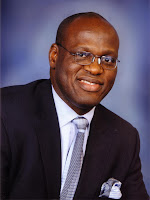
Meet Wale Babatunde...senior pastor of the World Harvest Christian Centre.

This man delivered this evening's 4thought on Channel 4, which can be viewed here:


I was left disappointed by this thought. The man seemed to imply that homosexuals were equivalent to thieves. (Perfectly logical I suppose, the one takes people's possessions, destroys their trust in humankind and leaves them in despair; the other is attracted to and falls in love with people of their own gender).

But the main reason I was left so disappointed with this 4thought was that, ironically and unfortunately, there simply wasn't any thought involved in it. Pastor Babatunde made the hideously fallacious statement that:

"The issue...should not be a matter of personal interpretation; the most important think is to look at what the Bible says"

How compelling Pastor Babatunde...how easily one would be inclined to agree with you. After all, who are Christians to consider themselves above the Bible?

Except...looking at what the Bible says is a matter of personal interpretation. Of course it is. Everything one reads, to some extent, one interprets. And there are a plethora of interpretations of scriptural passages: literal, allegorical, historical, purely contextual, universal.

No prizes for guessing how Pastor Babatunde thinks scripture should always be interpreted.

He then goes on to quote 1 Corinthians 6:9, which in his translation says:

Do you not know that the unrighteous will not inherit the kingdom of God? Do not be deceived; neither fornicators, nor idolaters, nor adulterers, nor homosexuals, nor sodomites...

So, the uninformed listener may assume from this that the Apostle Paul said homosexuals cannot inherit the kingdom of God, and therefore homosexuality is wrong.

What a depressingly narrow interpretation.

The Apostle Paul, factually speaking, did not say that homosexuals will not inherit the kingdom of God. Why not? Because the word homosexual, a Greek and Latin hybrid, was first used in 1869. And, unless I am very much mistaken, St Paul was writing in the first, rather than the nineteenth, century of the Common Era.

So, what words did he use? The words, in Greek, were: malakoi and arsenokoitai.

The first, malakoi, is the plural of the adjective 'soft'. (In Greek, as in many other classical languages, adjectives could be used as nouns). So, the literal translation is 'soft ones'. It may seem that Paul is obviously talking about homosexuals, but this is by no means clear. In fact, the term had in the past been used to refer to some heterosexuals. Early church fathers had used the term against masturbation.

The rendering of the term as 'effeminate', as some translations suggest, is closer, but is still very much based on assumptions. There were in fact other terms that were used instead for effeminacy, such as androgune (from man and woman) and thelubrios.

The meaning of the second term is equally by no means clear. It is highly problematic, for the term was first found to be used by Paul, and was not frequently used after him. Some translations render the term to refer to child molesters. If this is the case, it shows that there are grave problems with generalising the term to refer to all who practise sodomy.

So, it seems, that 1 Corinthians 6:9 does not obviously condemn homosexuals at all.

I do not doubt that Mr Babatunde believes he is preaching a message which God wishes him to preach. But I do not for a second believe that he has that message correct. And it's this sort of careless talk that leads to all sorts of assumptions being made and thousands of people being outcast by the church and made to feel dirty, evil and in many cases suicidal.

And those were exactly the sorts of people whom Jesus reached, and reaches, out to in love.

Sunday, 1 August 2010

Meeting Jesus Again for the First Time


The title words of today's entry are to be attributed to Marcus J. Borg, a theological Professor and member of the historical Jesus movement, The Jesus Seminar. These words were the title of a book of his which I have just read and felt moved and challenged by.

The book is one I would recommend to anyone who, like me, may have grown up with an image of Jesus as God's Son sent to earth to bear the punishment for my sins, to be sacrificed for my sake. If you are, or have the suspicion you may soon be, at the stage where the notions of sin and hell and judgement and Jesus bearing God's wrath become either stale, or tasteless, or no longer concepts to which you can relate, this book is most definitely for you.

Far from being what many conservative Christians would consider liberal theology to be - watering down scripture, removing what is significant from the heart of the Christian faith and leaving you with nothing of any meaning - in Meeting Jesus Again for the First Time Marcus Borg focuses on truths about who Jesus was which are so often neglected by the church and modern Christians in favour of one specific strand of theology which is actually based on a very small amount of the comparatively large New Testament Gospels, and upon only one of the three most significant stories of the Old Testament (which, for Borg, are the Exodus from Egypt, the exile to Babylon and the Priestly Story; the dominant doctrines of salvation, atonement, etc. are purely based on the latter of the three, and pay no attention whatsoever to the former two).

As I have probably made quite clear by now (!) I thoroughly recommend this book. You may not agree with everything Borg thinks (I myself don't, either), but there is compelling truth in this book that presents Jesus in a way which is far removed from the almost cringeworthy picture which is proclaimed ad nauseam by evangelical Christianity.

I conclude with some words from Marcus Borg himself:
For those of us who grew up in the church, believing in Jesus was important. For me...that phrase used to mean...'believing things about Jesus'. To believe in Jesus meant to believe what the gospels and the church said about Jesus. That was easy when I was a child, and became more and more difficult as I grew older...
Believe did not originally mean believing a set of doctrines or teachings; in both Greek and Latin its roots mean 'to give one's heart to'. The 'heart' is the self at its deepest level...Believing in Jesus does not mean believing doctrines about him. Rather, it means to...give one's self at its deepest level, to the post-Easter Jesus who is the living Lord, the side of God turned toward us, the face of God, the Lord who is also the Spirit'.

As a friend of mine frequently says, 'amen to that, brother!'.

Thursday, 8 July 2010

Developments and Regressions


What a mixed day in the world of current affairs. As an unashamed liberal, I progressed through the newspaper and went from depressed, to even more depressed, to feeling a glimmer of hope. Three news stories which I care deeply about.

Harrowing

Firstly, most will have heard of Sakineh Mohammedi Ashtiani, a lady who has been accused of adultery and could, at any time, be stoned, and whose distraught son has pleaded with the Iranian government, and now the world, to stop this barbaric fate awaiting her. (The picture to the left is not here but depicts a woman about to be stoned in Iran in 1979). How tremendously awful it must be to be in the position of this woman. Not only is she awaiting death, but will be given little warning of when it will come, and she is in prison for a 'crime' which there is every chance she did not commit. I trust that the vast majority of readers would agree that no matter how strongly anyone might object to adultery, such treatment cannot be justified. Because this is far beyond the case of whether or not adultery is objectionable, due to a number of factors:
  1. An act being morally wrong in someone's eyes does not constitute grounds for taking someone's life;
  2. Despite a lack of evidence and pleas of herself and her son that she was innocent, she was found guilty;
  3. She was given the horrendous punishment of 99 lashes and told the case was finished (however, she was then accused of murder, acquitted of murder but re-condemned for the suspected adultery)
  4. It is not an acceptable attitude of any religious believer to follow archaic laws demanding criminals to be killed; it is not the place of humans to take other human beings' lives
Thankfully there is pressure from many external forces, including many Western governments and NGOs. I hope and pray that this makes the difference needed. If you want to help in some small way, please sign the petition:

I would not be so naive as to consider such a case a novelty or a rare occurrence. But the global attention this story is receiving could contribute even in a small way to sending a message that the world will not tolerate such abominable denial of human rights.

Thoroughly Disappointing
Another person who I would not choose to be at this time (or indeed at any time) is the Very Reverend Dr Jeffrey John, Dean of St. Albans. He is a man so committed to his calling to the priesthood and dedicated to the service of others that he is willing to abstain from engaging in any kind of sexual relations with the man whom he loves.

But this isn't good enough for the Church. He was supported seven years ago as the next Bishop of Reading, but was forced to withdraw by his old friend and our (once openly) liberal Archbishop of Canterbury, the Rt Revd Dr Rowan Williams. Despite what must have been a real knock to his confidence and incredibly disheartening, he continued to serve God and the church with dedication. However, seven years on it seems the Church of England has not moved on. He was shortlisted and favoured (even by David Cameron) as the new Bishop of the very liberal Southwark diocese (for which such an informed liberal as himself would have been perfect) but, after a row amongst Church of England Bishops, another candidate has been chosen. Conservative Evangelicals with their tiresome incessant claims that homosexuality will split the church have once again stomped their feet, thrown their dogcollars out of the pram and have won. Dr Williams has once again been forced to betray his roots and true beliefs and to succumb to the will of those who refuse to allow any interpretation of scripture that doesn't take it literally.

People can claim to their heart's content that a CELIBATE homosexual will split the church. But whether liberal or conservative, I know of no Christian who can use the Bible justifiably to support a prejudice against homosexual orientation. There is nothing in the Bible condemning love for the same sex. Fine, let the conservative evangelicals stick with their mindless insistence that Leviticus etc. prove that gay sex is wrong. But there is no justification whatsoever in the Bible for a belief that a celibate homosexual is doing anything immoral. And this therefore becomes a matter of personal prejudice. The reality is many of our vicars grew up in a society and time where homosexuals were ostracised and it was considered perfectly acceptable to insult and victimise them. And now, faced with this situation, they cannot handle people whom they have viewed as different and inferior since their childhood being allowed to serve in the same capacity as themselves. The issue here is far beyond whether two men should sleep together; it is a question of whether for the rest of time people who are different should be forbidden from serving in a capacity which they feel God has called them to because we refuse to accept them, all for the sake of 'preserving unity'.

Am I alone in thinking that schism in the church would be a more desirable situation than the continued suppression of liberal, progressive Christians?

A glimmer of hope
However, as many will have heard that the Supreme Court has ruled that gay asylum seekers will not be forced to deport, and that they will be permitted to receive asylum on the grounds that they are gay and at risk of persecution in their own countries. This has arisen after the case of a gay men from Cameroon and his partner from Iran currently living in Britain because of the horrendous treatment they faced in their own countries. Finally Britain is doing something right!

Allow me to make the objections before the average Daily Mail reader butts in here:
  1. "I don't object to gay people [through gritted teeth] but this issue is a matter of the country being too full, not of homosexuality"
  2. "The country will become full of people pretending to be gay to be granted asylum in the UK"
  3. There is no proof that people are being persecuted in their own countries
  4. People could just hide their homosexuality and should if they want to be free from persecution
Firstly, I would ask people to ignore the fact that this about homosexuality. Really. It was well put by Antonia Senior, a journalist for the Times, who made the analogy to the Second World War. Asking a gay person to hide their sexuality and sending them back off to Iran would have been like asking a Jew to hide their Judaism/Jewishness and shovelling them back off to Nazi Germany. People shudder at the thought of the latter, so why do they see the former as being a completely different matter?

Secondly, with the matter of people pretending to be gay...I would hope that most would not assume that the country is stupid enough to let anyone in who just waltzes up and says "I'm gay". Granted, there is no official test in place (can you really test it?), but couples will be subjected to scrutiny and a general picture will be built up of whether they are genuinely homosexuals who are in danger, or heterosexuals who are pretending to be gay to escape their country. Yes, I don't deny that one or two will inevitably slip through the net. But it will not be a case of every Tom, Dick and Harry pretending to be gay and being granted asylum. And the few slipping through the net does not bother me in the slightest. Here's why:

Let's talk about the case of a man who is being called T to protect his identity, one of the men involved in this case. In his own country, he was seen kissing a male partner. A mob attacked him. Later, as he left church, he was once again attacked, and those attackers threatened to kill him, being told that: "you people cannot be changed." Once these attackers stripped T of his clothes, they attempted to cut off his penis with a knife. But then, at last, police officers intervened. And what did those policemen do? They asked why T was being attacked. They were then told that it was because he was gay. Their response? Well, one officer asked: "How can you go with another man?!", punched him in the mouth, then kicked him until he was unconscious, leaving him with such injuries that he was left in hospital for two months.

If this ruling saves even 50 people who suffer so tremendously, I don't mind one bit if there are a few who slip through the net, or a few more immigrants.

And with regards to all three, I believe in a God who would object to the stoning, support Jeffrey John and this new law if He were a citizen of this earth.